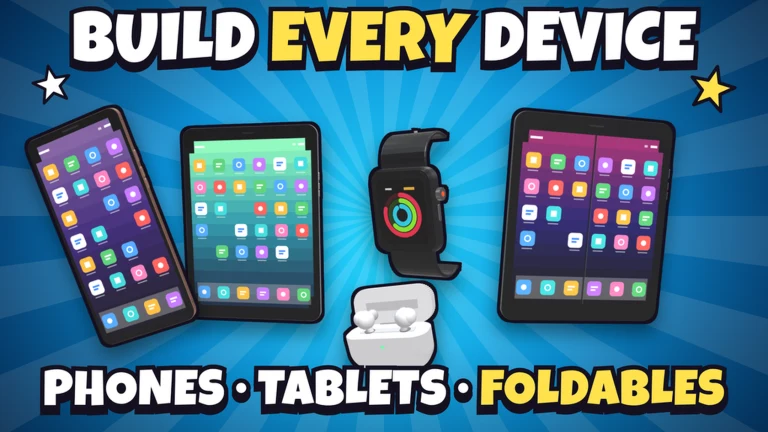
- Build a Phone Empire lets you design phones, price them, launch them, and grow a tech company in Roblox.
- Your first phone should be a low-cost balanced design, not a maxed-out flagship.
- Pricing is an experiment: adjust based on demand instead of sticking to one number.
- Hire staff and expand regions only after a product cycle is reliably profitable.
- Use the Legacy system to sell a mature company and restart with permanent boosts.
How to Build a Phone: The Core Loop
Build a Phone Empire, released by DEVTEC STUDIOS on September 22, 2026, is a Roblox tycoon where the entire game revolves around one repeatable cycle: design a phone, choose parts, set a price, launch it, watch sales, and reinvest. Every step in this guide serves that loop. Before spending any cash, learn where the phone design interface, production controls, pricing panel, and sales tracker are located in your garage starting base.
Video Highlights:
- There is no confirmed official trailer video available yet, so this guide is based on the official Roblox game page.
- Follow DEVTEC STUDIOS announcements for updates that may change design options and pricing behavior.
The game currently tracks around 795K+ total visits, 6.8K peak concurrent players, roughly a 76% rating, and 28 goals, which signals an active community but also frequent updates — always verify part costs and options in your current version.
| Game Element | What It Does | Early Priority |
|---|---|---|
| Phone Design | Combine screen, camera, shell, buttons, colors, materials, logo | ★★★★★ |
| Pricing Panel | Set the launch price and observe demand | ★★★★★ |
| Production | Turns your design into sellable units | ★★★★ |
| Launch System | Releases the product to market | ★★★★ |
| Staff / Research | Long-term scaling tools | ★★ |
Finish the first product cycle before touching expansion or heavy staff hiring. A stable, repeatable phone gives every later upgrade a financial base.
Build a Phone: Step-by-Step Process
Follow these five steps to get from an empty garage to your first profitable launch. Each step builds directly on the previous one, so resist the urge to skip ahead.
Start in the Garage
Use the garage as your operating base. Locate the design interface, parts categories, production area, and sales tracker before spending any starting cash on expansion.
Design the First Phone
Build a simple phone using affordable screen, camera, shell, button, color, material, and logo options. Prioritize a balanced design you can produce and sell consistently rather than the most expensive parts.
Set a Sustainable Price
Account for part and production costs, then price above them with room to spare. Start conservative: if demand is weak, lower the price rather than producing more of an unsellable phone.
Hire Staff Carefully
Recruit employees only when the business can cover their ongoing cost. Staff should clearly improve production or sales enough to justify the expense — avoid filling every position before the first product is profitable.
Launch, Save, and Reinvest
Release the phone, review sales and cash, then reinvest in improvements that directly support the next product. Keep a cash reserve for operations. The game auto-saves, but finish important actions before switching servers.
Spending most of your starting balance on expansion while your first product is still untested is the fastest way to stall a run. Expansion is most effective after consistent sales.
Phone Design Tier List by Stage
Phone design strength depends on more than one component. Screen, camera, shell, buttons, colors, materials, and logo should be evaluated together with price, demand, and marketing. Use these tiers as stage-based plans and compare them against your live sales data.
| Tier | Stage | Design Approach | Key Strength | Main Risk |
|---|---|---|---|---|
| S | Late Game | Balanced Premium Flagship | Supports high prices with strong brand identity | Inefficient before demand and cash flow stabilize |
| A | Mid Game | Balanced Sales Model | Good appeal-to-cost ratio, cash left for staff and marketing | Loses sales if priced near premium phones without matching value |
| B | Early Game | Low-Cost Starter Phone | Cheap, easy to test pricing, small loss if launch fails | Low ceiling on selling price |
| C | Any Stage | Unbalanced Maxed-Out Build | High ceiling when the market is ready | High costs, weak margins, drained cash if rushed |
Early: Test Cheaply
- Low-cost parts across all categories
- Focus on learning demand
- Minimize loss from a failed first launch
Mid: Balance Appeal and Cost
- Mid-range screen and camera
- Broad-appeal colors, standard materials
- Reserve cash for staff and marketing
Late: Go Premium
- High-end everything with marketing support
- Established regional reach
- Only when cash flow is stable
If a phone sells quickly with thin profit, raise the price gradually. If sales stall, cut the price or improve the design before producing more units.
Research Order and Region Expansion
Research determines which products your company can design and release. Start with the core phone path, then expand into adjacent categories as income and research capacity grow.
| Product Line | Unlock Focus | Priority | Planning Note |
|---|---|---|---|
| Phones | Core research path first | Highest | Phone releases fund everything else |
| Tablets | After phone operation stabilizes | High | Add when it won't slow phone development |
| Smartwatches | Connected-device branch | Medium | Needs cash and staff to manage extra releases |
| Earbuds | Accessory branch | Medium | Supporting line, not a phone replacement |
| Foldables | Advanced phone branch | Situational | Needs strong research capacity and reserves |
| Laptops | Late research options | Situational | Best during broad expansion phases |
Regional expansion should follow the same logic: only expand into new markets after consistent product performance and a healthy cash reserve. Expansion is far more effective when existing sales can fund new operations without interruption.
Invest first in technologies that unlock new products or improve your main revenue source. Optional product lines like earbuds and laptops should never delay stronger phone and tablet research.
Legacy Resets, Goals, and Game Passes
The Legacy system rewards you for selling a developed company and restarting with permanent boosts. Timing matters more than speed: a well-timed series of resets can outperform one very long first run.
Do not reset while your company is still establishing its basic income cycle. Reset when near-term growth slows and the permanent Legacy boost becomes more valuable than continued expansion.
The game's 28 goals provide bonus cash across design, hiring, research, releases, and expansion categories. Check the goals panel regularly so completed rewards are not left unclaimed while you plan upgrades.
| Goal Category | Examples | Recommended Order |
|---|---|---|
| Design | Create designs, add products to pipeline | Early |
| Hiring | Recruit employees, build the team | Early to mid |
| Research | Unlock tech, open new categories | Early to late |
| Releases | Launch products, build a release cycle | Early and recurring |
| Expansion | Grow company, add product lines | Mid-game onward |
For Game Passes, prioritize efficiency over cosmetics: research accelerators and cash multipliers suit frequent players, auto-hire and extra design slots suit multi-line operators, and premium cosmetics are purely personal choice.
Essential First-Run Milestones:
- Design and launch the first low-cost phone
- Find a price point with steady demand
- Hire the first employee only after stable profit
- Complete the core phone research path
- Claim every finished goal reward
- Plan the first Legacy reset once growth slows
FAQ
Q: How do I build a phone in Build a Phone Empire?
Open the phone design interface in your garage, pick compatible screen, camera, shell, button, color, material, and logo options, then set a price and launch. Start with affordable parts and adjust the design based on real sales results.
Q: What is the best first phone design?
A low-cost starter phone with affordable options in every category. It requires less starting cash, lets you test pricing and demand safely, and reduces losses if the first launch underperforms.
Q: When should I hire employees?
Only when your business can cover their ongoing cost. Compare employee expense with expected income, and avoid filling every position before the first product is reliably profitable.
Q: When should I sell my company for Legacy?
Sell after a productive development phase, once near-term growth begins to slow. The permanent Legacy boost makes each restart faster and more efficient, so several well-timed resets can beat one very long run.