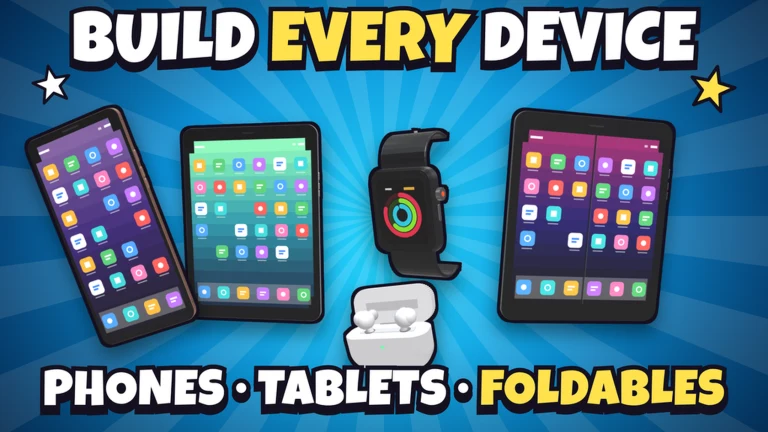
- Build a Phone Empire rewards players who perfect one product cycle before expanding aggressively.
- Pricing is an experiment: raise prices gradually on strong demand, cut them on weak sales.
- Research phones first, then tablets; treat earbuds and foldables as situational picks.
- Hire and market only after a product reliably covers its own costs.
- Legacy resets compound: several well-timed resets can outperform one long run.
How Money Works in Build a Phone Empire
In Build a Phone Empire, cash comes from a repeating product cycle: design a phone, choose components, set a price, launch it, and reinvest the sales income. The most common money mistake is chasing a single expensive upgrade while the core cycle is still untested. A stable, repeatable product gives every later investment a stronger financial base.
The game's revenue loop connects five systems, and each one either adds income or adds cost:
| System | Income Effect | Cost Risk |
|---|---|---|
| Phone Design | Determines selling price ceiling | Premium parts drain starting cash |
| Pricing | Directly sets per-unit profit | Too high kills demand |
| Staff | Speeds production and sales cycles | Ongoing salary expense |
| Marketing | Boosts launch visibility | Adds cost before income is proven |
| Regions | Multiplies market reach | Best funded after stable income |
Improve the complete product cycle instead of chasing one expensive upgrade. Design a phone that can sell, price it above its costs, measure demand, and reinvest only after income is dependable.
Five Steps to Your First Profitable Phone
Follow this sequence from the garage to your first reinvested profit. Each step builds the financial base for the next.
Start in the Garage
Use the garage as your base. Locate the phone design interface, the parts and customization categories, and where products are launched and sales are tracked before spending any cash on expansion.
Design a Balanced First Phone
Create a simple phone using affordable screen, camera, shell, button, color, material, and logo options. Avoid spending the entire starting balance on premium choices.
Set a Sustainable Price
Account for part and production costs, leave cash for operations, and review the expected product result before launch. Lower the price if demand looks weak.
Hire Only When the Cycle Supports It
Compare employee cost with expected income. Staff should improve the cycle enough to justify their ongoing expense — never fill every position before the first product is profitable.
Launch, Save, and Reinvest
Release the phone, monitor sales, and reinvest in improvements that directly support the next product. The game auto-saves, but finish important actions before changing servers.
Spending most of your balance on office expansion while your first product is still untested is the fastest way to stall your company's growth.
Money-Making Strategies Ranked by Priority
Not every investment pays off at the same time. These five strategies are ordered from highest to lowest priority for building cash.
Build a Product First (Highest)
- Create a repeatable phone design before expanding
- Stable products fund every later upgrade
- Best for new garage-stage players
Balance Parts vs. Cost (High)
- Pick components to match target customers and budget
- Premium parts only pay off at profitable prices
- Avoid maxing every category automatically
Test Price and Demand (High)
- Treat pricing as an experiment
- Strong sales, thin profit? Raise gradually
- Weak sales? Cut price or improve the design
Marketing and Staff Timing (Medium)
- Add costs after core sales are proven
- Strengthens an already profitable operation
- Avoid stacking ongoing costs early
Expand Regions Last (Medium)
- Regional expansion needs consistent performance
- Keep a healthy cash reserve first
- Best in mid- and late-game growth
Reinvest only in improvements that directly support the next product, and always keep a cash reserve for operating costs.
Research Order and Product Line Payback
Research determines which products you can design and release. The right order keeps your main revenue stream growing while new lines open up. Prioritize technologies that unlock new products or improve your primary income source first.
| Product Line | Unlock Focus | Priority | Planning Note |
|---|---|---|---|
| Phones | Core research path first | Highest | Phone releases establish the main revenue cycle |
| Tablets | After stable phone operations | High | Add only without slowing phone development |
| Smartwatches | Connected-device branch | Medium | Add once cash and staff can manage extra releases |
| Earbuds | Accessory research branch | Medium | Supporting line, not a reason to delay phones |
| Foldables | Advanced phone branch | Situational | Needs research capacity and cash reserves |
| Laptops | Late research options | Situational | Fit for broad expansion phases, not new companies |
Investing early in low-return optional product lines slows your main phone income. Complete the core phone path, confirm dependable cash flow, then diversify.
Pricing, Marketing, and Goals Working Together
Pricing, marketing spend, review scores, and sales performance all interact at every launch. A moderate design can lose sales if its price sits too close to premium products without matching perceived value — so each launch should be judged on margin, not just units sold.
Goals add a second income stream. The game tracks 28 goal tasks across categories, and completed goals pay cash rewards that can fund your next milestone. Work them into your normal plan so each action advances both the business and the reward track.
| Goal Category | Examples | Best Order |
|---|---|---|
| Design | Create designs, add products to pipeline | Early |
| Hiring | Recruit employees, build the team | Early to mid |
| Research | Unlock technologies, open categories | Early to late |
| Product Releases | Launch products, build release rhythm | Early, recurring |
| Expansion | Grow the company, add product lines | Mid-game onward |
| Reward Collection | Review objectives, claim cash | Every run |
Check the goals panel regularly so completed cash rewards are not sitting idle while you plan upgrades.
Legacy Resets and Long-Term Wealth
The Legacy system lets you sell your company and restart while keeping a permanent boost. Since a reset gives up current expansion progress, timing depends on whether another growth round produces more value than an immediate permanent bonus.
Build a Stable First Company
Establish dependable cash flow and unlock enough research to understand your run's pace. Do not reset while the basic income cycle is still shaky.
Compare Expansion vs. Legacy Value
Continue expanding while your company unlocks major improvements quickly; consider Legacy when progress slows to incremental gains.
Sell at a Deliberate Breakpoint
Reset after completing a productive development phase, not right after starting or mid-bottleneck.
Apply the Permanent Boost
Treat the Legacy bonus as a compounding investment — several well-timed resets can outperform one very long first run.
Money Milestones Per Run:
- Launch one profitable repeatable phone design
- Cover staff and marketing costs from sales income
- Complete core phone research before optional lines
- Claim all finished goal rewards
- Reach a deliberate Legacy reset breakpoint
Each new run should have a clear improvement target: faster research, earlier product expansion, or more efficient company growth.
FAQ
Q: How do I make money fast in Build a Phone Empire?
Launch a low-cost starter phone first, price it above production cost, then adjust based on demand. Raise prices gradually when sales are strong and cut them when demand is weak. Reinvest profits into the next product before spending on expansion.
Q: Should I hire employees right away?
No. Hire only when your business can support the ongoing cost. Staff improve production and sales cycles, but filling every position before your first product is profitable is a common early mistake.
Q: Which product line should I research first?
Phones have the highest priority because phone releases establish your main revenue cycle. Tablets come next once phone operations are stable, while earbuds, foldables, and laptops are situational picks for later expansion phases.
Q: When should I use the Legacy reset in Build a Phone Empire?
Sell your company after a productive development phase once progress begins to slow. The permanent Legacy bonus compounds across runs, so several well-timed resets often outperform one very long first run.