- Profits in Build a Phone Empire come from the full product cycle, not from a single expensive upgrade
- Start with low-cost phones to test pricing and demand before reinvesting in high-end parts
- Treat pricing as an experiment: if demand is weak, lower prices; if products sell out fast, raise them
- Add staff and marketing only after the core product is profitable
- Expand into new regions once income is stable, and plan Legacy resets for permanent growth bonuses
How the profit system works in Build a Phone Empire
Money in Build a Phone Empire follows a cycle: design a phone, choose parts, set a price, launch the product, and reinvest the sales revenue. Trying to maximize profits with a single premium upgrade or expanding too early usually backfires, because maintenance costs drain the cash flow of a business that is not ready yet. Instead, improve every stage of the cycle so each launch earns more than the last.
Key variables that affect profitability:
| Variable | Impact on profits | Control tip |
|---|---|---|
| Part cost | Higher upfront spend, higher potential sale price | Match part quality to real market demand |
| Pricing | Determines per-unit margin and sales volume | Test gradually; lower the price if demand is weak |
| Staff | Constant operating cost, faster production | Hire only when sales support it |
| Marketing | Boosts sales of products that are already profitable | Add it once core sales are stable |
| Region expansion | Opens new revenue sources, high upfront cost | Expand while keeping a cash reserve |
Reach profitability before upgrading the cycle. Every dollar you spend on any upgrade (staff, marketing, or expansion) before the full product cycle generates stable income delays profitability.
Profit strategy by stage
Adapt your strategy to your cash and progress. The same actions can boost or damage your profits significantly depending on how mature your company is.
Early: Garage stage
- First low-cost phone built with affordable parts
- Test prices without risking big losses
- Avoid overspending on expansion
- Complete design goals for extra cash
Mid: Sales stage
- Balanced mid-range design with broad appeal
- Price above cost with margin to reinvest
- Add staff and marketing once sales are stable
- Expand into the tablet line
Late: Scale stage
- Premium flagship products with high-end parts
- Viable once marketing and regional support are established
- Multiple product lines generate continuous income
- Plan Legacy resets for permanent bonuses
The fastest way to lose money early in the game is automatically picking the most expensive option in every part category. A phone with all premium parts only maximizes profit if its sale price recovers production costs and keeps a healthy cash reserve.
Action priority comparison by stage:
| Action | Early | Mid | Late |
|---|---|---|---|
| Simple designs | Critical | Useful | Low priority |
| Price experimentation | Critical | Ongoing | Ongoing |
| Hiring staff | Wait | Critical | Scale up |
| Marketing | Skip | Add | High impact |
| Region expansion | Skip | Plan | Critical |
| High-end parts | Skip | Use with care | Critical |
Profit cycle step by step
Design a sellable product
Pick screen, camera, casing, buttons, colors, materials, and logo options that match your current market and budget. Aim for a balanced design, not a max-spec one.
Set a sustainable price
Calculate part and production costs, then set a price that leaves a profit margin without scaring off your current customers. Start conservative.
Launch and measure demand
Release the product and watch how it sells. Fast sales with thin margins mean raise the price gradually; weak sales mean lower the price or improve the design.
Reinvest strategically
Reinvest profits into staff, marketing, or research only after the product generates stable income. Always keep a cash reserve to cover operating costs.
Expand and repeat
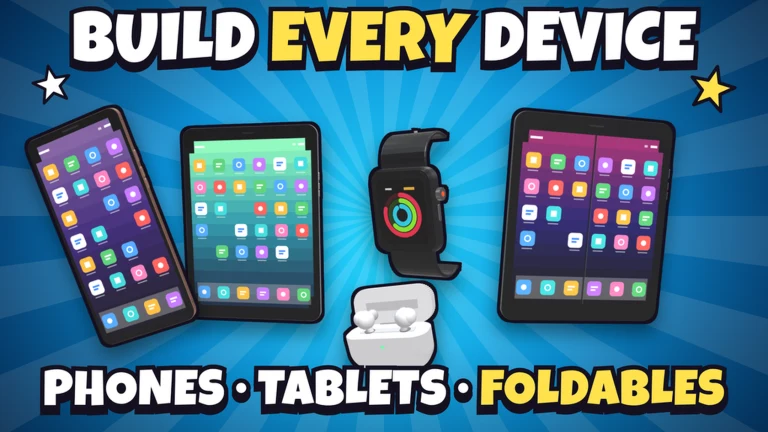
Expand into new product lines (tablets, smartwatches, earbuds) and new regions at the right time, then repeat the cycle from a stronger financial position.
Your price-to-cost balance is right when you can fund the next upgrade while keeping enough cash reserve to cover several rounds of production costs.
Research priorities and product lines
Research determines what your company can launch and, chosen poorly, it quietly eats profits. Use your research capacity to strengthen your main revenue source first, before diversifying into optional lines.
| Product line | Priority | When to research |
|---|---|---|
| Phones | Highest | Immediately — they are the base of your core revenue cycle |
| Tablets | High | After phone operations generate stable income |
| Smartwatches | Medium | When cash and staff can handle extra design work |
| Earbuds | Medium | As a supporting line, never as a substitute for core research |
| Foldables | Situational | Requires advanced research capacity and a cash reserve |
| Laptops | Situational | During broader expansion phases, not at the start of a new run |
Prioritize technologies that unlock new products or improve your main revenue source. Spending money on research branches too early delays profitable launches and hurts long-term profits.
Legacy resets and long-term profits
The Legacy system lets you sell a developed company in exchange for a stronger restart and permanent bonuses. A well-planned reset can outperform one very long run, because permanent bonuses compound.
- Do not reset while your company's core income cycle is not established yet
- Keep expanding while your current company still unlocks important upgrades quickly
- Consider Legacy when progress slows down to slow incremental growth
- Sell at a well-chosen cutoff point after a productive development phase
- Plan every run with a clear goal: faster research, earlier product expansion, or more efficient hiring
Treat Legacy like compound interest: several well-timed resets usually generate more money in the long run than a single run dragged on too long with slow growth.
Profit checklist and FAQ
Profit maximization checklist:
- Launch repeatable phone designs before expanding the office
- Verify prices cover part and production costs
- Hire staff after the first profitable launch
- Confirm stable sales before paying for staff and marketing
- Build a cash reserve before expanding into new regions
- Complete phone-focused research before unlocking tablets
- Review Legacy timing when current growth slows down
- Claim cash rewards from completed goals
Q: When should I hire my first employees in Build a Phone Empire?
Hire employees only when your first product is profitable and your workflow is stable. Employees carry ongoing costs, so hiring them must be justified by increased production or sales that generate more income than they cost.
Q: What do I do if my phones are not selling?
Treat pricing as an experiment. If demand is weak, lower the price or improve the design before producing more. Keeping prices high in a weak market is one of the fastest ways players lose money.
Q: Which product line should I research first?
Research phones first, because their launches establish your core revenue cycle and fund later technologies. Tablets come right after, once the phone operation can support an additional line.
Q: Does expanding into new regions always increase profits?
Not necessarily. Region expansion is only profitable when your products perform consistently well and you keep a cash reserve that can fund the new operations without interrupting existing sales. Expanding right after a single successful launch is risky.
Q: Do game passes bought too early help maximize profits?
Efficiency passes, such as research accelerators and money multipliers, mainly benefit active players and mature multi-product operations. Purely cosmetic passes do not increase profits and should be treated as a personal choice.