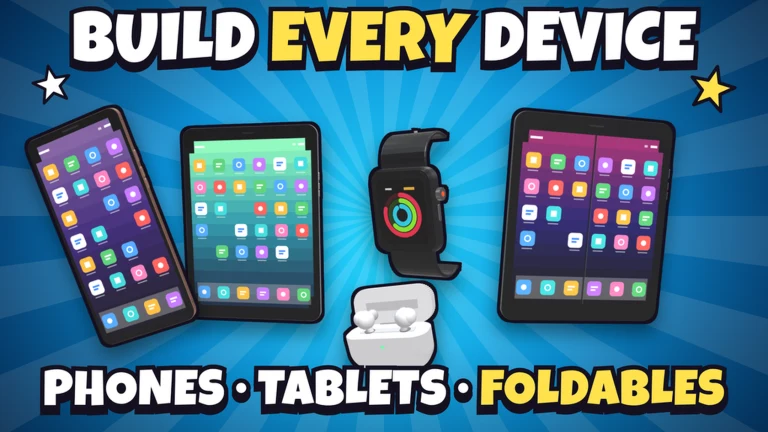
- Selling phones in Build a Phone Empire depends on design, price, marketing, and timing working together
- Design before expanding: build one reliable, repeatable phone product first
- Test prices gradually: raise after strong sales, cut after weak demand
- Add staff and marketing only after the core product sells profitably
- Expand regions last, once cash flow is stable across launches
How Selling Phones Works in Build a Phone Empire
Selling phones is the core revenue loop of Build a Phone Empire, the Roblox tycoon game by DEVTEC STUDIOS. You design a phone from screen, camera, shell, button, color, material, and logo options, set a price, launch it, and reinvest the sales income into research, staff, and expansion. Every successful launch funds the next one, so the quality of each decision compounds over time.
The official Build a Phone Empire game page is the primary reference point for how the sales loop is structured, alongside the DEVTEC STUDIOS community announcements.
| Sales Loop Stage | What You Do | What It Returns |
|---|---|---|
| Design | Pick screen, camera, shell, color, material, logo | Product appeal and production cost |
| Pricing | Set a launch price above costs | Margin per unit |
| Launch | Release the product to market | Sales volume and reviews |
| Reinvest | Spend income on research, staff, expansion | Faster, larger next cycle |
Treat each launch as an experiment. Improve the full product cycle — design, price, marketing — rather than chasing one expensive upgrade and hoping it sells.
Phone Design Choices That Drive Sales
Sales performance starts on the design screen. Each component category affects both the cost of production and how appealing the phone is to buyers, and the right mix depends on your company's current stage.
Early Game: Low-Cost Starter
- Affordable screen and camera options
- Low-cost shell, basic buttons
- Simple broad-appeal color
- Lowest risk when testing demand
Mid Game: Balanced Sales Model
- Mid-range screen and camera
- Durable, reasonably priced shell
- Broad-appeal color and standard material
- Leaves cash for staff and marketing
Late Game: Premium Flagship
- High-end screen and camera
- Premium shell and material
- Strong brand logo
- Supports high prices with established reach
Filling every category with the most expensive option early creates high costs, weak demand, and thin margins. Premium builds only pay off when marketing and regional reach already support them.
Pricing and Marketing Strategy
Pricing is the most direct lever on profit. A phone that sells quickly but earns little per unit needs a higher price; a phone with weak sales needs a lower price or a better design, not more production.
| Situation | Signal | Recommended Action |
|---|---|---|
| Fast sales, thin profit | Units move but cash grows slowly | Raise the price gradually |
| Slow sales, high price | Weak demand, reviews suffer | Cut price or improve design |
| Steady sales, healthy margin | Consistent income | Keep price, plan next product |
| Post-launch slump | Market interest fading | Reinvest in new design cycle |
Marketing strengthens an operation that already sells. It adds cost, so add campaigns after the core product proves it can move units at a profitable price.
Account for costs
Add up part and production costs before setting any launch price.
Price above break-even
Leave room for profit and keep cash available for operations.
Launch and observe
Release the phone and track sales volume and review feedback.
Adjust gradually
Nudge prices up after strong demand; cut after weak demand.
Reinvest deliberately
Put profit into the next product, staff, or research — never all into one upgrade.
Several well-priced repeatable launches beat one ambitious flop. Keep a cash reserve between cycles so a slow product never stalls the company.
Staff, Research, and When to Expand
Hire employees only when the business can support their ongoing cost. Staff improve production and sales, but filling every position before your first product is profitable drains cash fast.
Research determines what you can sell. Prioritize the core phone path first, then branch out as income grows.
| Product Line | Research Priority | Best Timing |
|---|---|---|
| Phones | Highest | Immediately — the main revenue cycle |
| Tablets | High | After phone operations stabilize |
| Smartwatches | Medium | When cash and staff can handle extra releases |
| Earbuds | Medium | As a supporting product line |
| Foldables | Situational | Advanced research branch, late game |
| Laptops | Situational | During broad expansion phases |
Regional expansion follows the same rule: expand after consistent product performance and a healthy cash reserve, not immediately after a single successful launch.
Expansion is most effective when the business can fund new regions without interrupting its existing sales cycle.
Launch Milestones Checklist
Use goals to earn extra cash while you build. Build a Phone Empire includes 28 goals across design, hiring, research, releases, and expansion — completing them alongside your normal plan doubles the payoff of every action.
Profitable Launch Milestones:
- Design and launch a repeatable starter phone
- Find a price with steady sales and healthy margin
- Hire first employees once income is stable
- Advance core phone research before side product lines
- Claim completed goal rewards regularly
- Expand into a new region after consistent sales
FAQ
Q: How do I sell phones profitably in Build a Phone Empire?
Design a balanced phone, price it above part and production costs, launch it, and adjust the price based on observed demand. Reinvest profits into the next product cycle rather than one expensive upgrade.
Q: Why is my phone not selling?
Usually the price is too high for the design's appeal, or the design mixes premium parts the market does not reward yet. Cut the price, improve the design, or both — do not keep producing a low-demand product.
Q: Should I hire employees before my first launch?
No. Recruit staff only when the business can cover their ongoing cost. Hiring before the first product is profitable is one of the most common early-game mistakes.
Q: When should I expand into new regions?
After consistent product performance and a healthy cash reserve. Expanding immediately after one successful launch risks interrupting your existing sales cycle.