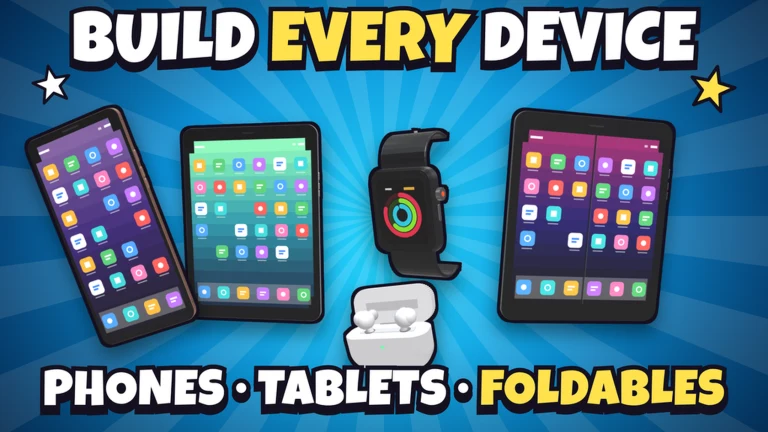
- Build a Phone Empire phone level progression is driven by research, design quality, and product launches.
- Phone research first: the core phone line funds every later product category.
- Match design to stage: cheap starter phones early, balanced mid-game models, premium flagships late.
- Reinvest sales: each launch should fund the next phone level, staff, and research.
- Legacy resets compound permanent boosts across multiple company runs.
How Phone Levels Work in Build a Phone Empire
Phone level in Build a Phone Empire reflects the overall quality and market position of the phones your company designs, produces, and sells. It is not a single stat — it combines your research progress, your chosen components (screen, camera, shell, button, color, material, logo), your pricing decisions, and your ability to market and distribute each product. Every phone you release establishes a revenue cycle, and that revenue determines how quickly you can push toward the next level of design and technology.
The game's core loop is straightforward: design a phone, set a price, launch it, watch sales, and reinvest. New players start in a garage with limited cash and basic components, so early phone levels are about learning the loop rather than chasing premium builds.
Early Game Phone
- Low-cost components
- Fast to produce and test
- Ideal for learning pricing
Mid Game Phone
- Balanced quality and cost
- Steady repeatable sales
- Funds staff and marketing
Late Game Flagship
- Premium parts across the board
- Supports high prices
- Needs stable demand and marketing
A higher phone level only pays off when your business can support the production cost, marketing, and regional reach that premium products require. Grow the whole company, not just the design screen.
Phone Level Tiers by Company Stage
Each stage of company growth calls for a different phone design philosophy. The table below maps design priorities to your current cash, sales volume, and market reach.
| Tier | Stage | Screen & Camera | Shell & Material | Pricing Approach | Best Use |
|---|---|---|---|---|---|
| B | Early Game | Affordable options | Low-cost shell, standard material | Conservative, adjust after launch | Testing demand with minimal risk |
| A | Mid Game | Mid-range quality options | Durable, reasonably priced | Moderate margin, broad appeal | Building repeatable income |
| S | Late Game | High-end options | Premium material and finish | High price with marketing support | Maximizing profit per unit |
| C | Any (risky) | Most expensive options everywhere | Premium everything | Very high price | Only viable with established demand |
Component categories that define phone level:
- Screen — the visual centerpiece; premium screens raise perceived value
- Camera — a key selling point for mid and high-tier phones
- Shell — durability and finish affect market appeal
- Button — functional early, feature-focused later
- Color and material — broad-appeal colors early, premium finishes late
- Logo — brand identity grows more valuable as your company scales
Filling every category with the most expensive option before your sales are stable creates thin margins, weak demand, and little cash left for the next launch. A tier C build used too early often performs worse than a disciplined tier A model.
Step-by-Step: Raising Your Phone Level
Establish the Core Phone Cycle
Start in the garage, design a low-cost starter phone, set a conservative price, and launch it. Focus on completing one reliable product cycle before spending cash on expansion. Confirm where design, production, pricing, and sales tracking interfaces are located.
Reinvest Into Phone Research
Use sales income to advance the core phone research path. Phone research is the highest-priority technology because phone releases are your main revenue engine and fund every later product line.
Upgrade Components Gradually
Improve one or two categories at a time — for example, move from a basic screen to a mid-range screen while keeping other parts affordable. Test whether the improved phone sells at a higher price before upgrading further.
Add Staff and Marketing
Once a product sells consistently, hire employees whose cost the business can support, and apply marketing to strengthen a cycle that already works. Both add ongoing expenses, so introduce them only after income is dependable.
Expand Regions and Diversify
With stable income and a cash reserve, unlock new regions and then branch into tablets, smartwatches, earbuds, foldables, and laptops. Expansion should never interrupt your core phone sales cycle.
Treat pricing as an experiment: if a phone sells fast with thin profit, raise the price gradually; if demand is weak, lower the price or improve the design before producing more units.
Research Order and Product Line Priorities
Research determines which products and component tiers your company can access. The recommended priority keeps phones central and opens adjacent categories only when income supports them.
| Product Line | Unlock Focus | Priority | Planning Note |
|---|---|---|---|
| Phones | Core research path, foundation of growth | Highest | Phone releases fund everything else |
| Tablets | Path after stable phone operation | High | Add when it won't slow phone development |
| Smartwatches | Connected-device branch | Medium | Needs cash and staff to manage extra releases |
| Earbuds | Accessory branch | Medium | Supporting line, not a replacement for phones |
| Foldables | Advanced phone branch | Situational | Requires strong research capacity and reserves |
| Laptops | Later research options | Situational | Best during a broad expansion phase |
Key research principles:
- Prioritize technologies that unlock new products or improve your main revenue source first.
- Avoid sinking research capacity into optional product lines before the phone path is generating reliable income.
- Each product line adds design work — make sure staffing scales with your release schedule.
Players who unlock product lines quickly often prioritize research-focused investments, since earlier technology access compounds across every later product and expansion decision.
Goals, Legacy, and Long-Term Progress
Build a Phone Empire includes 28 goals that reward progress across every system. Completing goals alongside your normal development plan means each business action advances both the company and the reward track.
| Goal Category | Examples | Recommended Order |
|---|---|---|
| Design | Create and improve product designs | Early |
| Hiring | Recruit employees, build the team | Early to mid-game |
| Research | Unlock technologies and product categories | Early to late |
| Product Releases | Launch products on a regular cycle | Early and recurring |
| Company Expansion | Grow product lines and reach milestones | Mid-game onward |
| Reward Collection | Review objectives, claim cash rewards | Throughout every run |
Legacy resets let you sell your company and restart with permanent boosts. The decision rule: do not reset while your basic income cycle is still developing, and consider Legacy when incremental progress begins to slow. Several well-timed resets can outperform one very long first run, because each new company starts with a stronger foundation.
Choose a reset point after completing a productive development phase. Selling immediately after starting, or during an active upgrade bottleneck, wastes the value of the current run.
Phone Level Milestones:
- Complete first garage-to-launch product cycle
- Advance core phone research to unlock better components
- Launch a balanced mid-game phone with steady sales
- Hire staff that pays for itself in production efficiency
- Expand into a second region with a cash reserve intact
- Reach a productive breakpoint and evaluate a Legacy reset
FAQ
Q: What determines phone level in Build a Phone Empire?
Phone level is shaped by research progress, component quality (screen, camera, shell, button, color, material, logo), pricing, and how well each launched product sells. It is a whole-company progression, not a single upgrade.
Q: Should I use the most expensive components on every phone?
No. Premium parts only pay off when demand, marketing, and cash flow can support them. Early on, a low-cost starter phone that tests pricing and demand reliably beats a maxed-out build with thin margins.
Q: When should I hire employees?
Hire when your product cycle is stable and income can cover the ongoing cost. Filling every position before your first product is profitable usually drains cash faster than staff improve output.
Q: How does the Legacy system affect phone progression?
Selling your company starts a new run while preserving permanent Legacy boosts. Rebuilding the core phone business first, then using the stronger start to reach research and product milestones sooner, makes each cycle faster than the last.