- Build a Phone Empire phone quality depends on balanced components, not maxed-out parts
- Early game: Use affordable screens, cameras, and shells to test pricing and demand safely
- Mid game: Balanced designs leave cash for staff, marketing, and research
- Late game: Premium flagships work only after demand and cash flow stabilize
- Golden rule: Price must exceed part and production costs with room to experiment
How Build a Phone Empire Phone Quality Works
Phone quality in Build a Phone Empire is not a single statistic. It emerges from how screen, camera, shell, button, color, material, and logo choices work together with your price, marketing, and market reach. A phone with expensive parts in every category can still perform poorly if the market cannot support its price, while a modest design priced well can fund your entire early game.
The design interface lets you preview the expected product result before launch, so use it to sanity-check each build. Quality choices should always match your current stage of company growth.
Quality is relative. The best phone is the one that sells profitably at your current stage — not the one with the most expensive components available.
Component Categories at a Glance
| Component | Role in Quality | Early Priority | Late Priority |
|---|---|---|---|
| Screen | Major driver of perceived quality | Affordable option | High-end option |
| Camera | Boosts appeal and price ceiling | Affordable option | High-end option |
| Shell | Durability and product identity | Low-cost option | Premium option |
| Button | Functional finishing touch | Basic option | Feature-focused option |
| Color | Marketability across buyers | Simple broad-appeal | Marketable premium |
| Material | Perceived build quality | Standard low-cost | Premium material |
| Logo | Brand recognition over time | Basic brand logo | Strong brand-focused |
Each category contributes differently. Screen and camera carry the most weight in what customers perceive, while color and logo build brand value that pays off across repeated releases.
Phone Quality Tier List by Game Stage
These tiers organize phone quality strategies around the three main phases of a run. Match your design to your bank balance and sales history rather than copying late-game builds early.
| Tier | Stage | Design Focus | Price Ceiling | Risk Level |
|---|---|---|---|---|
| S | Late Game | Balanced Premium Flagship | High | Medium |
| A | Mid Game | Balanced Sales Model | Moderate | Low |
| B | Early Game | Low-Cost Starter Phone | Low | Very Low |
| C | Any Stage | Unbalanced Maxed-Out Build | High on paper | Very High |
Tier S: Premium Flagship
- High-end screen and camera
- Premium shell and material
- Needs established marketing and regional reach
- Best when demand is proven and cash reserves are deep
Tier A: Balanced Sales Model
- Mid-range parts across categories
- Broad-appeal color and recognizable logo
- Leaves cash for employees and marketing
- The workhorse design for most of a run
Tier B: Starter Phone
- Affordable options everywhere
- Low starting cash requirement
- Ideal for testing pricing and demand
- Limits losses if the first launch flops
Maxing out every component category early produces low margins, weak demand, and drained cash for future launches. The "everything premium" build only makes sense when the market and your business are ready for it.
Step-by-Step: Building a High-Quality Phone That Sells
Follow this workflow to turn component choices into a profitable release. Each step protects your cash while pushing quality upward.
Match Components to Your Stage
Review your current cash and recent sales. Choose screen, camera, shell, button, color, material, and logo options that fit your stage — affordable early, balanced mid-game, premium late. Never spend the entire balance on design alone.
Preview the Expected Result
Use the design interface to check the expected product outcome before committing. Confirm the parts are compatible and the projected quality supports the price you plan to charge.
Price Above Total Cost
Account for part costs and production costs, then set a price that leaves clear profit margin. Start conservative — a lower price with steady sales beats a high price with no buyers.
Launch and Measure Demand
Release the phone and watch sales closely. If it sells quickly but profit per unit is thin, raise the price gradually. If sales are weak, cut the price or improve the design before producing more.
Reinvest in Quality Upgrades
Direct profits into the next design iteration, staff, or research that supports your main revenue cycle. Quality growth should compound release over release, not happen in one expensive jump.
Treat every launch as a test. Gradual price adjustments based on real demand data will outperform guessing, and they protect you from locking in a losing price on a quality build.
Quality vs. Cost: Component Trade-offs
Premium components are useful only when the resulting phone can sell at a profitable price. This comparison table shows how each upgrade decision affects your business.
| Decision | Quality Impact | Cost Impact | When It Makes Sense |
|---|---|---|---|
| High-end screen early | High appeal | Drains starting cash | Rarely — only with proven demand |
| Balanced mid-range parts | Solid appeal | Moderate | Mid-game default choice |
| Premium material + logo | Brand and build quality | High | Late game with marketing support |
| Cheap parts + low price | Low ceiling | Very low | First launch from the garage |
| Skipping staff/marketing for parts | No sales boost | Opportunity cost | Almost never — sales drive everything |
A quality phone with no marketing still needs the market to discover it. Add marketing and staff only after the core product already sells well enough to cover those ongoing costs.
Research Supports Higher Quality
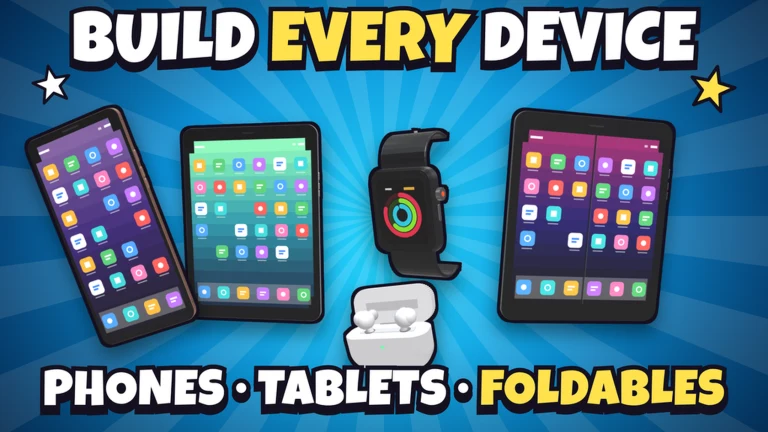
Research determines which products and component levels your company can access. Phones come first, followed by tablets, smartwatches, earbuds, foldables, and laptops as your research capacity grows.
| Product Line | Research Priority | Quality Planning Note |
|---|---|---|
| Phones | Highest | Foundation of revenue — research first |
| Tablets | High | Add once phone operations are stable |
| Smartwatches | Medium | Needs cash and staff headroom |
| Earbuds | Medium | Supporting line, not a replacement |
| Foldables | Situational | Advanced branch, late game only |
| Laptops | Situational | Broad expansion phase projects |
Phone Quality Checklist and Common Mistakes
Run through this checklist before every launch to make sure quality decisions actually translate into sales.
Pre-Launch Quality Checklist:
- Components match my current game stage
- Expected product result reviewed in the design interface
- Price set above part and production costs
- Cash reserve kept for operating costs and the next design
- Marketing and staff scaled to proven sales, not hopes
Mistakes That Sink Quality Builds
| Mistake | Consequence | Fix |
|---|---|---|
| Maxing every component early | Low margins, drained cash | Downgrade to stage-appropriate parts |
| Pricing without checking costs | Selling at a loss | Recalculate before launch |
| Ignoring weak demand signals | Unsold inventory, wasted production | Lower price or redesign |
| Hiring before first profit | Ongoing costs with no income | Wait for a stable product cycle |
| Expanding regions too fast | Interrupted core sales cycle | Expand after consistent income |
After a successful launch, reinvest in the upgrade that most directly supports your next product — better parts, useful research, or staff that speeds the cycle. Scattered spending slows quality growth.
FAQ
Q: Does using the most expensive parts always make the best phone in Build a Phone Empire?
No. The most expensive option in every category often creates low margins and weak demand early on. Phone quality works best when components, price, marketing, and production cost are evaluated together for your current stage.
Q: How does phone quality affect pricing?
Higher quality designs support higher selling prices, but only when the market can bear them. If a quality phone sells quickly at thin profit, raise the price gradually; if sales stall, lower the price or improve the design before producing more.
Q: When should I start building premium flagship phones?
Premium flagships work best in the late game, after demand is proven, marketing and regional reach are established, and cash reserves can absorb high component and operating costs without risking future launches.
Q: Does research improve phone quality?
Research determines which products and component levels your company can access. Prioritizing the core phone research path first builds the revenue cycle that funds higher-quality designs and later product lines like tablets and foldables.