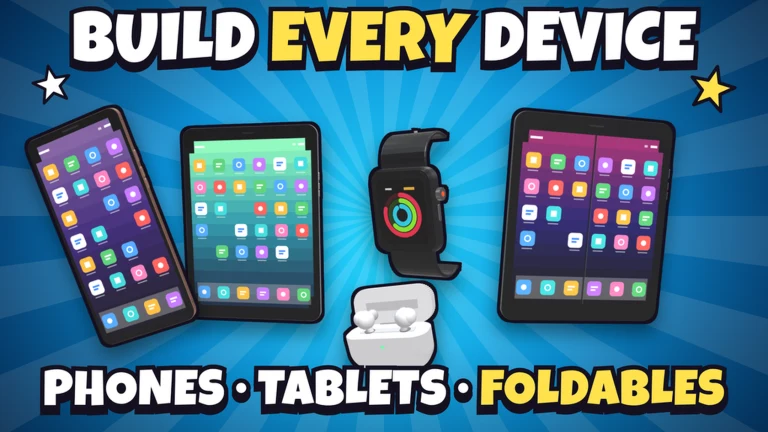
- Build a Phone Empire is a Roblox tycoon by DEVTEC STUDIOS where you design phones, hire staff, research tech, and launch products.
- Start in the garage: learn the design, production, pricing, and launch interfaces before spending cash on expansion.
- One product cycle at a time: launch a cheap, balanced first phone, verify sales, then reinvest profits.
- Hire staff only when income is stable — every employee adds a recurring cost.
- Automatic saving protects progress, but finish important actions before leaving a server.
Build a Phone Empire Core Loop for Beginners
Build a Phone Empire places you in charge of a phone company that starts from a humble garage. The entire game revolves around one repeatable cycle: design a product, set a price, launch it, collect sales income, and reinvest that cash into better designs, staff, and research. New players who understand this loop early consistently outperform those who spend their starting balance on cosmetic upgrades or premature expansion.
The game launched on September 22, 2026, and belongs to the Roblox simulation / tycoon category. Core activities include phone design, office building, staff hiring, technology research, product launches, and leaderboard competition across 28 goals.
The five pillars of the game:
| Pillar | What It Does | Beginner Priority |
|---|---|---|
| Phone Design | Screen, camera, shell, buttons, colors, materials, logo choices | ★★★★★ |
| Pricing & Launch | Sets profit margin and market demand | ★★★★★ |
| Staff Hiring | Improves production and sales cycles, adds ongoing cost | ★★★☆☆ |
| Research | Unlocks phones, tablets, watches, earbuds, foldables, laptops | ★★★★☆ |
| Office & Expansion | Larger workspace, decor, regional market reach | ★★☆☆☆ |
Your first phone does not need premium parts. A balanced, low-cost design lets you test pricing and demand with minimal losses if sales disappoint.
Step-by-Step: From Garage to First Launch
Follow this sequence to establish a dependable income cycle within your first session. Each step builds directly on the previous one, so avoid skipping ahead to expansion or mass hiring.
Start in the Garage
Use the garage as your operating base. Locate the phone design interface, identify the parts and customization categories, and find where products are launched and where sales are tracked. Do not commit cash to expansion yet.
Design Your First Phone
Create a simple phone using available screen, camera, shell, button, color, material, and logo choices. Prioritize a balanced design that can be produced and sold consistently. Review the expected product result before launch.
Set a Sustainable Price
Account for part and production costs, then choose a price that leaves room for profit without pricing out the current market. Start conservatively — lower the price if demand is weak rather than producing more units.
Hire Staff Carefully
Recruit employees only when the business can support their cost. Compare each employee's expense with expected income, and avoid filling every position before your first product is profitable.
Launch, Save, and Reinvest
Release the phone, monitor sales, and reinvest the resulting cash into the next product. Keep a cash reserve for operating costs, and finish important actions before leaving or changing servers.
Spending most of the starting balance on office expansion or premium parts while the first product is still untested is the fastest way to stall your company. Build a stable product first.
First Phone Design: Component Choices
Phone design strength depends on more than a single component. Evaluate screen, camera, shell, buttons, color, material, and logo together with price, demand, and production cost. Match your design stage to your current cash and sales target.
| Component | Early Game (B-Tier) | Mid Game (A-Tier) | Late Game (S-Tier) |
|---|---|---|---|
| Screen | Affordable option | Mid-range, quality-focused | High-end option |
| Camera | Affordable option | Mid-range option | High-end option |
| Shell | Low-cost option | Durable, reasonably priced | Premium option |
| Button | Basic option | Functional option | Premium or feature-focused |
| Color | Simple broad-appeal | Broad-appeal color | Marketable premium color |
| Material | Standard low-cost | Standard quality | Premium material |
| Logo | Basic brand logo | Recognizable general-purpose | Strong brand-focused logo |
Low-Cost Starter Phone
- Requires less starting cash
- Easier to test pricing and demand
- Reduces loss from a failed first launch
- Risk: limited selling price ceiling
Balanced Sales Model
- Best appeal-to-cost ratio
- Practical base for repeat sales
- Leaves cash for staff and marketing
- Risk: loses sales if priced near premium phones
Premium Flagship
- Supports high selling prices
- Clear premium product identity
- Works with marketing and regional reach
- Risk: inefficient before cash flow is stable
If a phone sells quickly but earns thin profit, raise the price gradually. If sales are weak, cut the price or improve the design — never keep an expensive price after the market shows weak demand.
Money Management and Research Order
The most reliable way to grow cash is improving the complete product cycle rather than chasing a single expensive upgrade. Spend early money in this order:
| Priority | Action | Why It Matters | Best Timing |
|---|---|---|---|
| Highest | Build a repeatable product | Every later upgrade needs a financial base | Immediately |
| High | Balance parts and production cost | Premium parts pay off only at profitable prices | Each design |
| High | Test price and demand | Prevents losses from low-demand products | Every launch |
| Medium | Add marketing and employees | Strengthens an already-profitable operation | After stable sales |
| Medium | Expand regions | More effective with consistent income and reserves | Mid to late game |
Recommended research order for beginners:
| Product Line | Priority | Planning Note |
|---|---|---|
| Phones | Highest | Establishes the main revenue cycle that funds everything else |
| Tablets | High | Add once phone operations are stable |
| Smartwatches | Medium | Requires enough cash and staff for extra design work |
| Earbuds | Medium | Supporting line, not a reason to delay phone research |
| Foldables | Situational | Advanced branch, needs research capacity and reserves |
| Laptops | Situational | Better during broad expansion, not a fresh company |
Prioritize technologies that unlock new products or improve your main revenue source before investing in optional product lines. A strong phone business pays for every later branch.
Beginner Goals Checklist
Goals provide an extra source of cash while pushing progress across every system. Complete them alongside your normal development plan so each action advances both the business and the reward track. The game currently offers 28 goals across categories like design, hiring, research, releases, and expansion.
Your First Session Milestones:
- Locate all garage interfaces (design, production, pricing, launch)
- Design and launch your first balanced phone
- Test at least two price points and compare sales
- Hire your first employee only after stable income
- Claim all completed goal rewards before logging off
- Keep a cash reserve for the next product cycle
Completed rewards are sometimes left unclaimed while players plan upgrades. Review the goals panel regularly so cash rewards are not forgotten mid-run.
Beginner FAQ
Q: What is the first thing I should do in Build a Phone Empire?
Start in the garage and learn where the phone design, production, staff, pricing, and launch controls are located. Do not spend your starting cash on expansion — design a simple, balanced phone and get it to market first.
Q: When should I hire my first employee?
Hire only when your business can support the recurring cost. Compare the employee's expense with expected income, and avoid filling every position before your first product is consistently profitable.
Q: How do I price my first phone?
Account for part and production costs, then set a conservative price that leaves a profit margin. Treat pricing as an experiment: raise it gradually if sales are strong, or lower it and improve the design if demand is weak.
Q: Which research should I unlock first?
Prioritize the core phone research path, since phone releases establish your main revenue cycle. Expand into tablets, smartwatches, and earbuds only after phone operations generate reliable income.