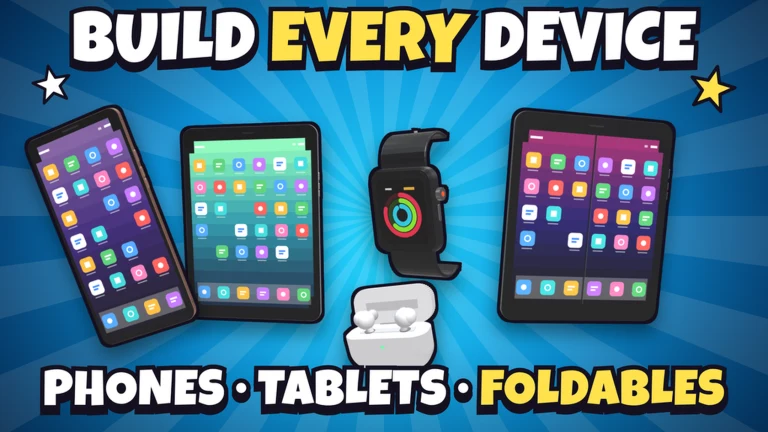
- Build a Phone Empire progression depends on repeating one profitable product cycle before expanding anything else
- Early cash should fund a cheap phone, not office expansion or premium parts
- Research order: phones first, then tablets, watches, earbuds, foldables, laptops
- Time staff and marketing only after a product sells reliably, never before
- Legacy resets compound permanent bonuses when timed at growth slowdowns
Core Progression Loop Overview
The fastest Build a Phone Empire progression route does not come from any single expensive upgrade. It comes from tightening the core loop: design a phone, price it above cost, launch it, watch demand, and reinvest the profit into the next product. Players who spend their starting cash on expansion or premium components before their first reliable seller almost always slow themselves down.
The game, published by DEVTEC STUDIOS on the official Roblox page, currently features 28 goals, and progress is automatically saved. That means every session should end with cash reinvested rather than sitting idle.
| Stage | Main Goal | Cash Priority | Common Mistake |
|---|---|---|---|
| Garage start | First sellable phone | Low-cost parts | Maxing every component |
| First launch | Learn real demand | Keep a cash reserve | Overpricing untested product |
| Stable income | Hire and market | Staff + marketing | Hiring before profit exists |
| Mid game | Tablets + regions | Research + expansion | Expanding after one launch |
| Late game | Flagships + Legacy | Premium builds | Resetting too early |
Do not spend most of your starting balance on expansion while your first product is still untested. A stable product gives every later upgrade a stronger financial base.
Fastest Early-Game Route: Garage to First Profit
The garage phase determines the pace of your entire run. The goal is simple: get one phone designed, priced conservatively, and launched without draining your balance.
Learn the Garage Layout
Before spending anything, locate the phone design interface, the parts and customization categories, and where products launch and sales are tracked. Knowing the controls saves real playtime later.
Design a Low-Cost Starter Phone
Use affordable screen, camera, shell, and button options with a simple broad-appeal color and basic material. This tier requires less starting cash, makes pricing tests easier, and limits losses if the first launch underperforms.
Set a Sustainable Price
Account for part and production costs, then price slightly above break-even. Treat pricing as an experiment: if sales are fast but thin on profit, raise the price gradually; if demand is weak, cut the price or improve the design.
Launch, Save, Reinvest
Release the phone, review sales and cash, and immediately reinvest in improvements that support the next product. Keep a reserve for operating costs. The game autosaves, but finish key actions before switching servers.
If a phone sells quickly with weak profit, the market is telling you the price is too low. Raise it in small steps instead of redesigning the product.
Mid-Game Priorities: Staff, Marketing, and Research Order
Once a product sells reliably, three systems unlock real speed: employees, marketing, and the research tree. Each one adds ongoing cost, so the order matters.
Hire Staff Carefully
- Recruit when income can cover ongoing wages
- Staff should speed design or sales
- Do not fill every position early
Marketing at the Right Time
- Strengthens an already-profitable cycle
- Adds cost before it adds sales
- Best after regular income is confirmed
Research Product Lines
- Phones first, always
- Tablets once phones fund themselves
- Watches and earbuds as supporting lines
| Product Line | Priority | When to Research | Planning Note |
|---|---|---|---|
| Phones | Highest | Immediately | Establishes the main revenue cycle |
| Tablets | High | After stable phone income | Only when it will not slow phone development |
| Smartwatches | Medium | Reliable income + staff | Adds connected-device demand |
| Earbuds | Medium | When diversifying | Supporting line, not a priority |
| Foldables | Situational | Advanced research done | Needs cash reserve and capacity |
| Laptops | Situational | Broad expansion phase | Not for a brand-new company |
Phone research early matters because phone releases fund every later technology. Delaying the core path to chase optional product lines is the most common mid-game stall.
Cash Strategy and Design Tiers by Stage
Fastest progression means matching your design tier to your current cash and market position, not always building the best phone available.
| Tier | Stage | Design Approach | Strength | Risk |
|---|---|---|---|---|
| B | Early game | Affordable parts, simple color, basic logo | Cheap demand testing | Low price ceiling |
| A | Mid game | Mid-range screen/camera, durable shell | Balanced appeal and cost | Loses to premium if priced too close |
| S | Late game | High-end everything, premium material | Supports high prices | Inefficient before demand stabilizes |
| C | Any stage (avoid early) | Most expensive in every category | High ceiling when ready | Weak margins and drained cash early |
The unbalanced maxed-out build deserves special warning: stacking the most expensive option in every category before your market is ready produces low margins, weak demand, and no cash for the next launch. Reserve it for testing the top end of pricing when your business can absorb the loss.
Premium components are useful only when the resulting phone can sell at a profitable price. Never pick the most expensive option in every category by default.
Regions, Goals, and the Legacy Reset Decision
Regional expansion and goal rewards multiply an already-working business. The Legacy system then lets you trade a developed company for a stronger restart.
Region and Goal Timing
| System | Recommended Timing | Key Benefit |
|---|---|---|
| Region expansion | After consistent sales + cash reserve | New markets without interrupting sales |
| Design goals | Early | Bonus cash while you build anyway |
| Hiring goals | Early to mid-game | Rewards for natural staffing |
| Release goals | Early and recurring | Steady reward track per launch |
| Expansion goals | Mid-game onward | Milestone cash for growth |
| Reward collection | Check the goals panel every session | Unclaimed rewards are wasted income |
When to Sell and Reset
Build a Stable Company First
Never reset while your company still struggles to establish its basic income cycle. Complete the phone path first.
Compare Expansion vs. Legacy Value
Keep expanding while your company unlocks major improvements quickly. Consider Legacy when progress slows to incremental gains.
Sell at a Deliberate Breakpoint
Reset after finishing a productive development phase, not during an active bottleneck.
Rebuild Faster With the Permanent Boost
Treat the Legacy bonus as a compounding investment. Several well-timed resets can outperform one very long first run.
Each new run should have a clear improvement target: faster research, earlier product expansion, or more efficient company growth. That is how permanent bonuses stack.
Progression Checklist
Fastest Route Milestones:
- Launch a low-cost starter phone from the garage
- Confirm reliable sales before hiring any staff
- Add marketing only after profit is consistent
- Research phones fully, then unlock tablets
- Claim completed goal rewards every session
- Expand regions only with a healthy cash reserve
- Time a Legacy reset when growth slows
End every session with cash reinvested in research, staff, or your next design. Idle cash does not progress your empire.
FAQ
Q: What is the fastest way to start Build a Phone Empire progression?
Design a low-cost starter phone in the garage, price it slightly above cost, launch it, and reinvest every sale into the next product. Skipping premium parts and expansion early keeps cash available for the improvements that actually speed up progression.
Q: When should I hire employees?
Hire only when your income can cover their ongoing cost and your workflow is stable. Filling every position before your first product is profitable is one of the most common early-game mistakes.
Q: What research order is fastest?
Phones first, since phone releases establish your main revenue cycle and fund later tech. Then tablets once phone income is stable, followed by smartwatches and earbuds as supporting lines. Foldables and laptops suit a broad expansion phase, not a new company.
Q: When is the right time for a Legacy reset?
Sell your company after a productive development phase, once near-term growth from expanding slows compared to the permanent Legacy boost. Several well-timed resets compound into faster runs than one very long first company.