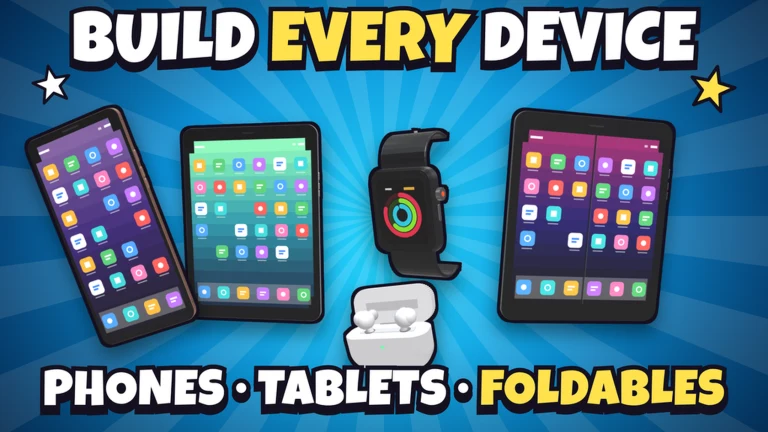
- Build a Phone Empire money strategy: strengthen the full product cycle, not a single upgrade
- First priority: launch one repeatable, profitable phone before expanding anything
- Pricing rule: raise prices gradually on strong sellers, cut prices on weak demand
- Staff and marketing: add them only after sales reliably cover the extra cost
- Long-term income: use well-timed Legacy resets to compound permanent cash bonuses
How Money Works in Build a Phone Empire
In Build a Phone Empire, cash comes from selling products you design, price, and launch. Every reliable money strategy improves one part of the same loop: design a phone, choose parts, set a price, launch it, watch sales, and reinvest. Players who chase one expensive upgrade before their first product sells consistently almost always stall.
The most common cash-flow mistakes and their fixes:
| Mistake | Why It Costs You | Fix |
|---|---|---|
| Expanding offices first | Rent and build costs drain cash before income exists | Launch one profitable phone first |
| Maxed-out parts everywhere | Highest costs rarely match early demand | Use affordable, balanced components |
| Pricing too high too early | Weak demand, unsold stock, wasted production | Start conservative, test, adjust |
| Hiring a full team immediately | Ongoing salaries before regular sales | Hire only when the cycle is stable |
| No cash reserve | One bad launch can stall operations | Keep a buffer for operating costs |
Do not spend most of your starting balance on premium parts or office expansion while your first product is still untested. A stable, repeatable product gives every later upgrade a stronger financial base.
The Five Core Money Strategies
These five strategies are ranked by priority for most players in 2026. Apply them in order: each one assumes the previous is already working.
Build a Product First
- Priority: Highest
- Launch a repeatable design before any expansion
- Best for garage-stage players
- Avoid: spending on space while untested
Balance Parts and Cost
- Priority: High
- Match components to budget and target buyer
- Premium parts only if price stays profitable
- Avoid: maxing every category automatically
Test Price and Demand
- Priority: High
- Treat pricing as an experiment
- Raise gradually on fast sellers, cut on weak demand
- Avoid: keeping a high price after weak sales
Marketing and Staff Timing
- Priority: Medium
- Add after the product already sells well
- Each adds an ongoing cost
- Avoid: stacking costs before regular sales
Expand Regions Later
- Priority: Medium
- Only after consistent income and reserves
- Expansion should not interrupt the sales cycle
- Avoid: expanding after one lucky launch
Legacy Resets
- Priority: Long-term
- Sell the company for permanent boosts
- Several timed resets can beat one long run
- Avoid: resetting before income is established
If an upgrade does not directly help the next product sell better, delay it. Cash spent on the product cycle compounds; cash spent elsewhere mostly sits.
Fast Money Route: Step-by-Step
Follow this sequence when starting a fresh run, including after a Legacy reset. Each step is designed to reach dependable income as quickly as possible.
Start in the Garage
Learn the phone design, production, staff, pricing, and launch interfaces before committing any cash. Knowing where every control lives saves you from wasted spending in the first minutes.
Design a Low-Cost Starter Phone
Use affordable screen, camera, shell, and material options. A simple, broad-appeal color and a basic logo keep production cheap. The goal is a phone you can profitably sell and iterate on, not a flagship.
Set a Sustainable Price
Account for part and production costs, then add a modest margin. If demand is weak, lower the price or improve the design before producing more. If it sells fast with thin profit, raise the price gradually.
Hire Only What Pays for Itself
Compare each employee's cost against expected income gain. Hire once the workflow is stable, and never fill every position before the first product is profitable.
Launch, Save, Reinvest
Release the phone, monitor sales, and reinvest profits into the next design. The game auto-saves, but finish important actions before switching servers. Keep a reserve for operating costs at all times.
You have reached fast-money status when a launch reliably produces more cash than it costs, and you can fund the next improved design without touching your reserve.
Reinvesting Cash: Where Money Goes First
Once income starts flowing, reinvestment order matters more than reinvestment size. This table ranks the best uses of surplus cash:
| Rank | Investment | When to Buy | Expected Return |
|---|---|---|---|
| 1 | Better phone design (balanced parts) | Immediately after stable sales | ★★★★★ |
| 2 | Core phone research path | Early, continuously | ★★★★★ |
| 3 | First employees | Once cycle is stable | ★★★★ |
| 4 | Marketing for a proven product | After repeatable sales | ★★★★ |
| 5 | Tablet research | After phone income is solid | ★★★ |
| 6 | Regional expansion | Mid-game with reserves | ★★★ |
| 7 | Watch, earbud, foldable lines | After diversification is affordable | ★★ |
Research priority by product line:
| Product Line | Priority | Best Time to Research |
|---|---|---|
| Phones | Highest | First — funds everything else |
| Tablets | High | After stable phone operation |
| Smartwatches | Medium | With sufficient cash and staff |
| Earbuds | Medium | As a supporting line |
| Foldables | Situational | Late game only |
| Laptops | Situational | Broad expansion phase |
Do not delay stronger phone and tablet research to chase accessory lines early. Optional product lines pay off only when your main revenue stream already covers research costs comfortably.
Goals, Rewards, and Legacy Income
Goals are a secondary income stream many players forget to collect. With 28 goals available, checking the panel regularly keeps completed rewards from going unclaimed.
| Goal Category | Focus | Recommended Order |
|---|---|---|
| Design | Create and improve designs | Early |
| Hiring | Build the team | Early to mid-game |
| Research | Unlock technologies and categories | Early to late |
| Product Releases | Launch regularly | Early and recurring |
| Expansion | Grow the company | Mid-game onward |
| Reward Collection | Claim cash rewards | Throughout every run |
For long-term money, the Legacy system is the strongest tool. Selling your company restarts development while preserving permanent boosts.
Do not reset while the company is still establishing basic income. Reset at a deliberate breakpoint — after a productive phase — when growth visibly slows. Several well-timed resets can outperform one very long first run because each permanent boost compounds.
Fast Money Milestones:
- Launch first profitable starter phone
- Complete a full design-launch-reinvest cycle
- Hire first employee that covers its own cost
- Claim all available goal rewards
- Establish a cash reserve before expanding
- Complete one well-timed Legacy reset
FAQ
Q: What is the best way to get money fast in Build a Phone Empire?
Launch one low-cost, balanced phone first, price it conservatively, and reinvest every sale into the next improved design. Stable product cycles generate income far faster than early expansion, premium parts, or a full staff.
Q: Should I use the most expensive parts on my first phone?
No. Maxed-out builds have poor value early because high costs create thin margins and weak demand. Use affordable, balanced components until your market and cash flow are established.
Q: When should I hire employees and buy marketing?
Only after your product already sells reliably. Marketing and staff strengthen a profitable operation, but stacking their ongoing costs before regular sales is the fastest way to run out of cash.
Q: How does the Legacy system help me earn more?
Selling your company starts a new run while keeping permanent Legacy bonuses. Reset at a deliberate breakpoint after growth slows, then use the boost to reach research and expansion milestones faster each cycle.