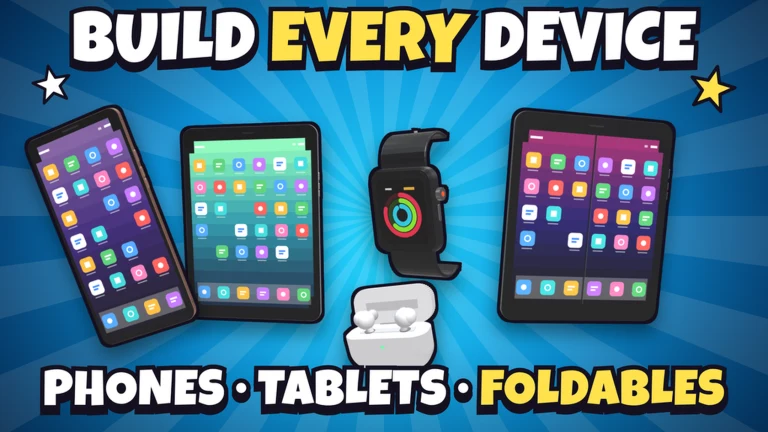
- Best phone in Build a Phone Empire depends on matching components to your current cash and market demand
- Early game: use low-cost balanced parts, test pricing before scaling up
- Mid game: mid-range screens and cameras give the best margin-to-appeal ratio
- Late game: premium flagships work only with established marketing and regional reach
- Golden rule: never max every component category before your sales cycle is stable
How Phone Design Works in Build a Phone Empire
In Build a Phone Empire, your company's success starts with the phones you design. Every phone combines seven decision categories: screen, camera, shell, buttons, color, material, and logo. Each choice affects production cost, customer appeal, and the price your phone can realistically command. A phone is only "the best" when its total cost, demand, and selling price work together profitably — not when it simply uses the most expensive parts.
The design interface is available from your starting garage. Before spending cash, locate the design menu, review the parts categories, and check how each option changes the projected product result. New players consistently lose money by picking premium options in every slot before their first launch has proven any demand.
Choosing the most expensive option in every category early on creates high costs, weak margins, and little cash left for research, staff, or your next launch. Premium parts only pay off when demand and cash flow are already stable.
| Design Category | What It Affects | Early Game Advice |
|---|---|---|
| Screen | Appeal, cost | Affordable option is enough |
| Camera | Appeal, cost | Skip premium until mid game |
| Shell | Durability perception | Low-cost shell reduces launch risk |
| Buttons | Style detail | Basic option works fine |
| Color | Market appeal | Simple broad-appeal color |
| Material | Premium feel | Standard low-cost material |
| Logo | Brand identity | Basic brand logo builds recognition |
Phone Design Tier List by Game Stage
The strongest design strategy changes as your company grows. Use these stage-based tiers as design plans, then verify them against your live sales results after each update.
S Tier - Balanced Premium Flagship (Late Game)
- High-end screen and camera
- Premium shell and material
- Supports the highest selling prices
- Requires established marketing and regions
A Tier - Balanced Sales Model (Mid Game)
- Mid-range screen and camera
- Durable, reasonably priced shell
- Best margin-to-appeal balance
- Leaves cash for staff and marketing
B Tier - Low-Cost Starter Phone (Early Game)
- Affordable parts in every slot
- Minimal starting cash required
- Ideal for testing price and demand
- Limits losses from a failed first launch
C Tier - Unbalanced Maxed Build (Any Stage)
- Most expensive option everywhere
- High ceiling, poor early value
- Weak demand and margins if rushed
- Only viable with mature operations
A moderate design can lose sales if its price sits too close to a premium product without matching perceived value. Keep a clear gap between your budget and flagship lines.
| Tier | Stage | Price Range | Cash Requirement | Main Risk |
|---|---|---|---|---|
| S | Late Game | High | Very high | Inefficient before stable demand |
| A | Mid Game | Medium | Moderate | Priced near premium rivals |
| B | Early Game | Low | Low | Limited price ceiling |
| C | Situational | Very high | Very high | Low margins when rushed |
Step-by-Step: Making Your Best Phone
Follow this sequence each time you design a new product. The loop mirrors the game's core cycle: design, price, launch, measure, reinvest.
Assess Your Cash and Stage
Check your balance and current research unlocks. Your available cash decides whether a B-tier starter or an A-tier balanced build is the smarter choice right now.
Select Components as a Set
Choose screen, camera, shell, button, color, material, and logo together. Aim for a coherent quality level across all slots rather than one premium part surrounded by cheap ones.
Set a Sustainable Price
Price above total part and production cost while staying within what the current market accepts. Start conservative — you can raise the price gradually if the phone sells quickly.
Launch and Watch Demand
Release the phone and monitor sales. Quick sales with thin profit means raise the price; weak sales means lower the price or improve the design before producing more.
Reinvest Into the Next Cycle
Use profits for research, staff, or a higher-tier design. Keep a cash reserve for operating costs so one weak launch never stalls the whole company.
Treat every price as a test. Adjust gradually based on real sales data instead of committing to one fixed price across multiple launches.
Research Priorities That Support the Best Phones
Your best phone is limited by what your research has unlocked. The core phone research path should come first, because phone releases establish your main revenue cycle and fund everything else. Expand into adjacent product lines only when income and research capacity allow it.
| Product Line | Priority | When to Research |
|---|---|---|
| Phones | Highest | Immediately — core revenue source |
| Tablets | High | After phone operations are stable |
| Smartwatches | Medium | With enough cash and staff to manage more releases |
| Earbuds | Medium | As a supporting line, not a replacement |
| Foldables | Situational | With advanced research and cash reserves |
| Laptops | Situational | During broad expansion phases |
Prioritize technologies that unlock new products or improve your main revenue source before investing in optional product lines. A flashy side category rarely beats a stronger phone pipeline.
Supporting Systems: Staff, Marketing, and Launches
A great design still needs a business around it. Hire employees only when your workflow is stable enough that their cost is justified by faster production or sales. Add marketing after a product already sells well, since marketing strengthens a profitable operation rather than rescuing a weak one.
Before Every Launch, Confirm:
- Component quality is consistent across all seven categories
- Price sits above total production cost
- Research requirements for the design are complete
- Cash reserve covers operating costs after the launch
- Goals panel checked for claimable rewards
Goals across design, hiring, research, releases, and expansion pay cash rewards. Complete them alongside your normal plan so every action advances both the business and the reward track.
FAQ
Q: What is the best phone in Build a Phone Empire?
There is no single best phone for every situation. Early on, a low-cost starter phone with affordable parts minimizes risk. Mid game, a balanced mid-range design offers the best margin-to-appeal ratio. Late game, a premium flagship with high-end screen, camera, and material supports the highest prices once marketing and regions are established.
Q: Should I use the most expensive components in every category?
No. Maxing every category early creates high costs, weak demand, and low margins. Premium parts only pay off when your sales cycle, marketing, and cash flow are already stable.
Q: How do I price my phone correctly?
Set the price above part and production costs while staying within current market tolerance. If the phone sells fast with thin profit, raise the price gradually. If sales are weak, lower the price or improve the design before producing more units.
Q: Which research should I unlock first?
The core phone research path comes first because phone releases build your main revenue cycle. Tablets are next once phone operations are stable, while smartwatches, earbuds, foldables, and laptops fit later expansion phases.