- Build a Phone Empire progression runs in cycles: design a phone, launch it, reinvest the cash.
- Early game: build one repeatable product before spending on expansion or premium parts.
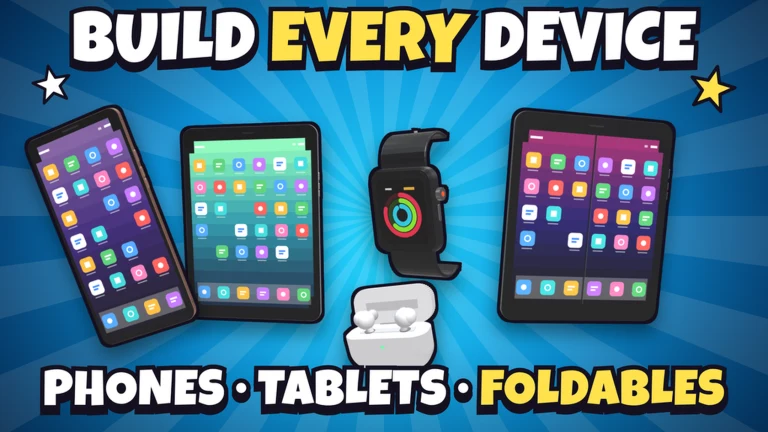
- Research order: phones first, then tablets, smartwatches, earbuds, foldables, laptops.
- Legacy resets grant permanent boosts; sell at a deliberate breakpoint, not mid-slump.
- 28 goals provide extra cash rewards across design, hiring, research, and expansion.
Core Progression Loop Overview
Progression in Build a Phone Empire follows a tycoon loop: design a product, set a price, launch it, monitor sales, and reinvest the profits into research, staff, and office space. Players start in a garage and work toward a global headquarters. The game launched on September 22, 2026, and features 28 goals plus a Legacy reset system.
The table below breaks each stage into its main objective and the mistake that most often stalls growth.
| Stage | Main Objective | Cash Priority | Common Mistake |
|---|---|---|---|
| Garage Startup | First profitable phone | Basic parts, conservative price | Overspending on premium components |
| Early Growth | Repeatable sales cycle | Staff when income is stable | Hiring before first profit |
| Mid Game | New product lines | Tablets, marketing | Ignoring pricing experiments |
| Late Game | Regional expansion | Premium flagship designs | Expanding on a single launch |
| Legacy | Sell and restart | Permanent boosts | Resetting during slow progress |
Focus on one reliable product cycle at a time. Every later upgrade—staff, marketing, regional offices—works better when the core phone already sells consistently.
Early Game: Garage to First Profit
The garage is the tutorial for the entire game loop. Learn where phone design, production, pricing, and launch controls are located before committing any cash to expansion.
Start in the Garage
Locate the design interface, identify parts categories, and check where sales are tracked before spending anything.
Design the First Phone
Build a simple, balanced phone using affordable screen, camera, shell, button, color, material, and logo options. Avoid draining the starting balance on premium choices.
Set a Sustainable Price
Price above production cost but within the current market range. Start conservative, then adjust based on demand.
Hire Staff Carefully
Recruit only when income can cover the ongoing cost. Compare employee cost with expected sales before filling positions.
Launch, Save, and Reinvest
Release the phone, review sales, and reinvest in the next design. The game autosaves, but finish key actions before switching servers.
Do not spend most of your starting cash on office expansion while the first product is still untested. A failed launch with no reserve stalls the whole run.
Research and Product Line Order
Research determines which products the company can design and release. Phone research is the foundation because it establishes the main revenue cycle that funds everything else.
| Product Line | Unlock Focus | Priority | Planning Note |
|---|---|---|---|
| Phones | Core research path first | Highest | Phone releases fund all later technology |
| Tablets | After stable phone income | High | Add when it will not slow phone development |
| Smartwatches | Connected-device branch | Medium | Needs enough cash and staff to manage |
| Earbuds | Accessory branch | Medium | Supporting line, not a replacement |
| Foldables | Advanced phone branch | Situational | Only with strong research capacity |
| Laptops | Late research options | Situational | Best during broad expansion phases |
Match designs to your stage. Early game favors a low-cost starter phone (B tier), mid game a balanced sales model (A tier), and late game a premium flagship (S tier). A maxed-out build on every component too early usually produces weak margins and low demand.
Money, Staff, and Regional Expansion
Cash growth comes from improving the full product cycle, not from a single expensive upgrade. Treat pricing as an experiment: raise prices gradually when sales are fast, lower them or redesign when demand is weak.
Test Price and Demand
- High priority
- Raise price on fast sales
- Reduce or redesign on weak demand
Marketing and Staff Timing
- Medium priority
- Add after core product sells well
- Each adds ongoing cost
Expand Regions Last
- Medium priority
- Needs stable income and reserves
- Most effective mid to late game
Goal categories reward every part of this plan. Completing goals alongside normal development keeps the reward track moving with the business.
| Goal Category | Completion Focus | Recommended Order |
|---|---|---|
| Design | Create and improve designs | Early |
| Hiring | Build the team as needed | Early to mid-game |
| Research | Plan around main product path | Early to late |
| Product Releases | Regular launch cycle | Recurring |
| Company Expansion | Fund with release profits | Mid-game onward |
| Reward Collection | Check the goals panel often | Every run |
Keep a cash reserve for operating costs at all times. Marketing, staff, and expansion should strengthen an already profitable cycle, not compete with it for the same cash.
Legacy Strategy and Milestones
The Legacy system lets you sell the company and restart with permanent boosts. A good reset preserves the value of the current run while skipping a long stretch of slow incremental growth.
Before You Reset, Complete These:
- Stable phone income cycle established
- Research pace understood for the current run
- Near-term expansion gains compared with Legacy value
- Goals rewards claimed before selling
- A clear improvement target set for the next run
Do not reset while the company is still struggling to build basic income. Several well-timed resets can outperform one very long first run, because each permanent boost compounds across future companies.
Q: What is the best early-game plan in Build a Phone Empire?
Design a simple, affordable phone in the garage, price it conservatively, launch it, and reinvest the profits. Establish one repeatable product cycle before spending on staff, marketing, or expansion.
Q: Which product line should I research first?
Phones come first because they build the main revenue cycle. Tablets are next, followed by smartwatches and earbuds. Foldables and laptops are situational picks for later expansion phases when cash and research capacity allow.
Q: When should I hire employees?
Hire only when current income can cover the ongoing cost and the staff member clearly improves production or sales. Filling every position before the first product is profitable is a common early mistake.
Q: How does the Legacy system work?
Selling your company starts a new development cycle while preserving permanent Legacy boosts. Reset at a deliberate breakpoint after a productive phase, when continued growth slows compared to the permanent benefit you gain.