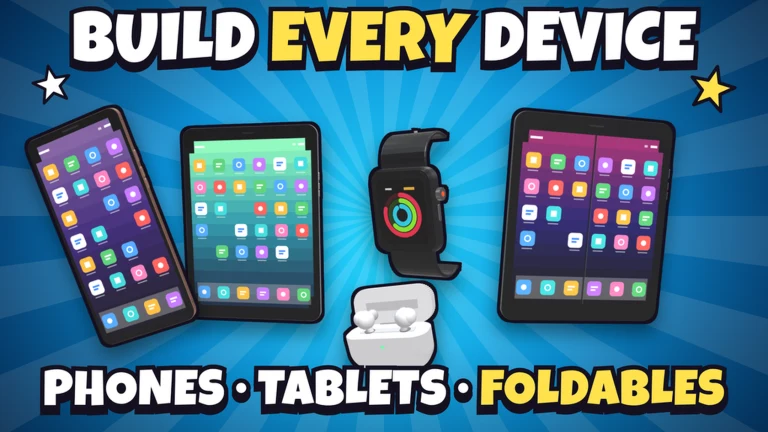
- Build a Phone Empire tips and tricks: Optimize design, pricing, research, and launches together
- Early game rule: Launch one repeatable phone before spending cash on expansion
- Pricing trick: Test demand first; raise prices only after sales prove strong
- Research order: Phones first, tablets second, smartwatches and earbuds later
- Legacy timing: Sell your company when growth slows, not during a bottleneck
Core Build a Phone Empire Strategies
The most common mistake in Build a Phone Empire is treating each system as separate. Design, pricing, staffing, research, and launches form a single product cycle, and the players who grow fastest are the ones who strengthen the whole loop instead of chasing one expensive upgrade.
Before spending anything, understand the three pillars that decide your income:
| Pillar | What It Controls | Early Priority | Late Priority |
|---|---|---|---|
| Product Design | Quality, appeal, production cost | ★★★★★ | ★★★★ |
| Pricing & Demand | Profit per unit, sales speed | ★★★★★ | ★★★★★ |
| Research & Expansion | New product lines, market reach | ★★ | ★★★★★ |
A stable product beats a fast expansion. Launch a phone that sells reliably, then reinvest the profits — never the reverse.
Conservative Start
- Low-cost components
- Safe price testing
- Smallest loss on failure
- Best for the garage phase
Balanced Growth
- Mid-range parts
- Consistent repeat sales
- Cash left for staff
- Best for mid-game scaling
Premium Flagship
- High-end everything
- Supports top prices
- Needs stable demand first
- Best for late-game empires
Early Game: From Garage to First Launch
Your first run in the garage sets the pace for everything after it. Follow this sequence to avoid the cash traps that stall most new companies.
Learn the Garage Layout
Locate the design interface, parts categories, launch controls, and sales tracking before committing any cash. Knowing where everything sits prevents rushed spending.
Design a Simple First Phone
Pick affordable, compatible options across screen, camera, shell, buttons, color, material, and logo. A balanced starter phone is easier to price and recover from.
Set a Sustainable Price
Account for part and production costs, leave operating cash spare, and start conservatively. If demand is weak, cut the price before producing more units.
Hire Only When Stable
Recruit employees only when income covers their ongoing cost. Do not fill every position before your first product is profitable.
Launch, Save, Reinvest
Release the phone, review sales and cash, and reinvest in improvements that directly support the next product. Keep a cash reserve at all times.
Spending most of your starting balance on office expansion or premium parts before your first launch is the fastest way to stall a new company.
Money Tricks: Pricing, Marketing, and Cash Flow
Pricing in Build a Phone Empire is an experiment, not a fixed number. The market tells you the answer through sales speed and reviews, and adjusting quickly protects your margins.
| Situation | What It Means | Correct Move |
|---|---|---|
| Sells fast, thin profit | Price is too low | Raise the price gradually |
| Sells slowly, decent margin | Demand is weak | Cut price or improve design |
| Sells fast, strong profit | Sweet spot found | Scale output and marketing |
| Barely sells at all | Product-market mismatch | Redesign before producing more |
Marketing and staff strengthen a profitable operation — they do not create one. Add them only after the core product already covers the extra cost.
Cash priority: next product improvement, then staff that speeds the cycle, then marketing, then regional expansion. Skipping ahead usually creates costs your income cannot carry yet.
Research Order and Product Line Priorities
Research decides what your company can actually design and release. Unlocking product lines in the wrong order wastes research capacity on low-return categories while your main revenue path stalls.
| Product Line | Priority | When to Research |
|---|---|---|
| Phones | Highest | Immediately — core revenue cycle |
| Tablets | High | After phone income is stable |
| Smartwatches | Medium | When cash and staff allow extra design work |
| Earbuds | Medium | As a supporting line, never before tablets |
| Foldables | Situational | Only with strong research capacity |
| Laptops | Situational | During a broader expansion phase |
Phone releases fund everything else. Every research point diverted to accessories before your phone cycle is dependable slows total company growth.
Legacy Resets and Goal Farming
The Legacy system lets you sell a developed company for a permanent boost, trading current progress for a faster next run. Timing matters more than size.
| Signal | Reset? | Reason |
|---|---|---|
| Income cycle still stabilizing | No | You would reset before the payoff |
| Major unlocks still coming fast | No | Keep growing while progress is cheap |
| Growth slowing to increments | Yes | Permanent boost beats slow gains |
| Just finished a productive phase | Yes | Best breakpoint — full value captured |
Several well-timed Legacy resets generally outperform one very long first run. Give each new run a clear target: faster research, earlier expansion, or more efficient staffing.
Goals are a second income stream. The game offers 28 goals across design, hiring, research, releases, and expansion — check the goals panel regularly so completed cash rewards are not left unclaimed.
Every-Run Milestones:
- Launch a repeatable first phone from the garage
- Hire staff only after the first profitable product
- Complete phone research before accessory lines
- Claim all finished goal rewards
- Time a Legacy reset at a growth slowdown
FAQ
Q: What is the best Build a Phone Empire strategy for brand-new players?
Start in the garage with low-cost components, launch one simple phone, price it conservatively, and reinvest the profits into the next product. Avoid expansion spending until the first product cycle is reliably profitable.
Q: How should I price my phones?
Cover part and production costs with room for profit, then treat the price as an experiment. Raise it gradually if the phone sells too fast, and cut it or improve the design if demand is weak.
Q: Which research should I unlock first?
Phones first — they establish your main revenue cycle. Tablets come next once phone income is stable, followed by smartwatches and earbuds. Foldables and laptops suit a later expansion phase.
Q: When should I sell my company in a Legacy reset?
Reset after a productive development phase when growth slows to small increments, not while major unlocks are still arriving quickly. The permanent Legacy bonus compounds across well-timed resets.